The potential of Biologicals

Understanding and unlocking how Biologicals can help Canadian farmers.

soybean rows in sunset

The rising influence of Biologicals in agriculture

Agriculture is facing one of its most significant transformations in decades, driven by the demand for sustainable, innovative solutions to support increased on-farm productivity. Among these solutions, biological products - comprising of materials naturally found in the environment, such as beneficial bacteria or enzymes derived from natural sources - are becoming essential tools for farmers looking to enhance productivity, manage stress, and adapt to climate, regulatory, and consumer changes.


Projections show that by 2035, Biologicals could make up 25% of the total global crop protection market ,with an anticipated market size of $30 billion annually (in context, the 2023 herbicide market size is approximately $33 billion)


Biologicals are defined as biocontrol, biostimulants, biofertilizers
Corteva BI Internal Analysis, Dunham Trimmer, AgBioINvestor AgBioInvestor’s Future of Agriculture Report, Sept 2022


While Biologicals currently occupy a smaller share of the market, three major drivers are expected to fuel rapid adoption over the next decade:
Abiotic stress: how to tackle the threat to your yields

Canadian farmers are no strangers to the threats posed by pests, diseases, and weeds – collectively known as biotic stressors – that can devastate crops if left untreated. However, most Canadian farmers now agree that abiotic stressors – non-living environmental factors – are the biggest crop challenge they face each year. This includes stressors such as temperature extremes, hail damage, and nutrient deficiencies, which are all viewed as uncontrollable and unpredictable challenges. 

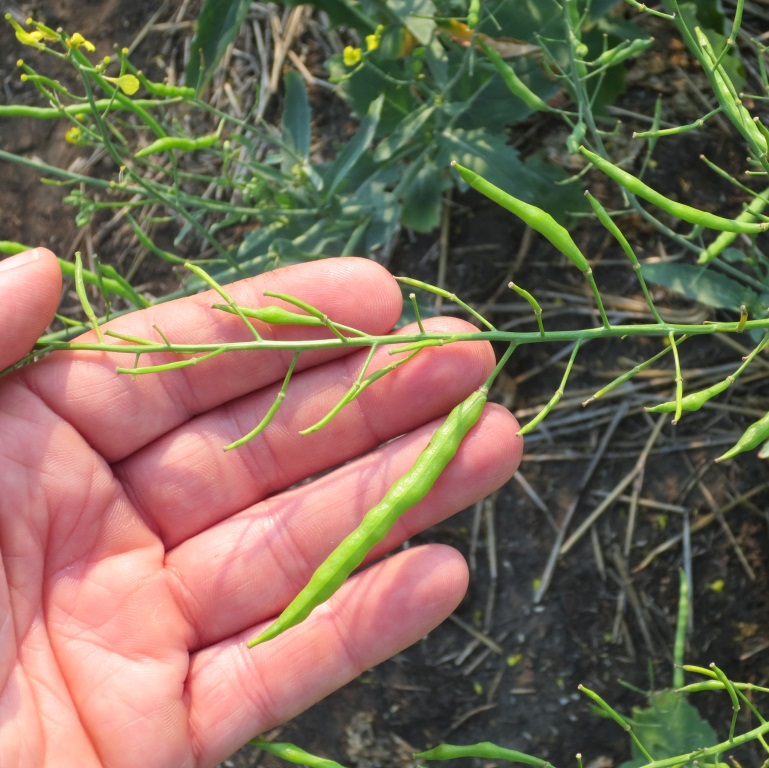
canola pod drop
Pod drop in canola due to heat blast

Biotic stress

Biotic stress refers to negative effect on crops from other living organisms including weed, disease and insect pressures.

Abiotic stress

Abiotic stress refers to the negative effect of inorganic factors on crops, including heat stress, cold stress, water limitations or drought, phytotoxicity, hail damage, nutrient loss and deficiency, and hormone limitations.


From biotic to abiotic: a shift in priorities

Abiotic stress has become even more pressing with the rise in climate variability, which has led to prolonged droughts, unpredictable frosts, and extreme heat waves. Canadian farmers are increasingly affected by this environmental instability, adding to the stress of their day-to-day operations, and robbing them of potential productivity. Managing abiotic stress requires a shift from reactive to proactive approaches, especially as the impact of these stressors is expected to intensify.

For the most part, the agriculture industry has been focused on managing biotic stressors such as disease, insects, and weeds. While these are critical pests, addressing abiotic stressors is crucial if we are looking to increase productivity on every acre, and is currently underserved. 

Canadian farmers are no strangers to the threats posed by pests, diseases, and weeds – collectively known as biotic stressors – that can devastate crops if left untreated. However, most Canadian farmers now agree that abiotic stressors – non-living environmental factors – are the biggest crop challenge they face each year. This includes stressors such as temperature extremes, hail damage, and nutrient deficiencies, which are all viewed as uncontrollable and unpredictable challenges. 

The yield gap and the need for new approaches

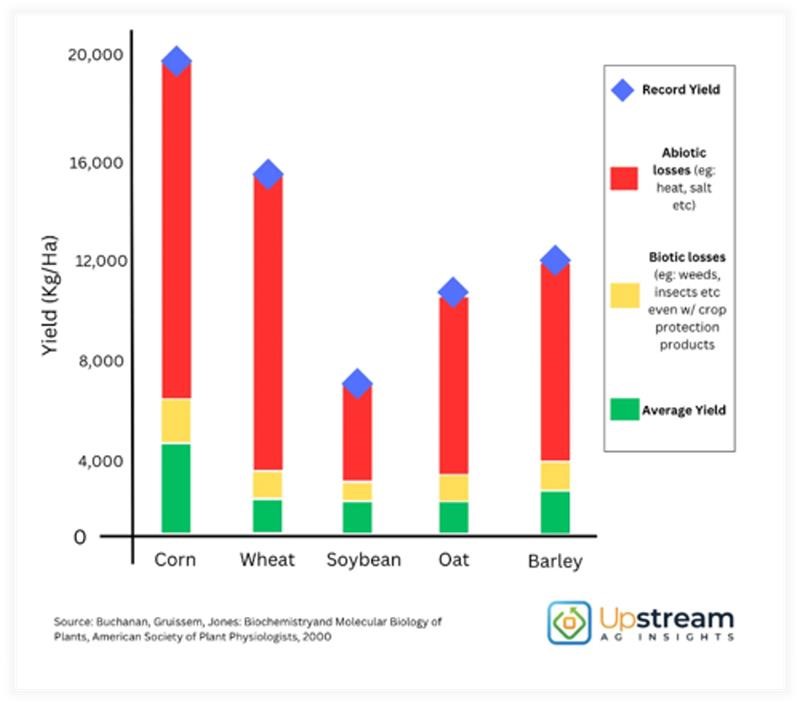
Understanding the “yield gap”, or the difference between actual crop yields and the maximum potential attainable yield under ideal conditions, highlights the need for improving plant productivity. This difference between actual yield and attainable yield is the result of both biotic and abiotic stressors.

Bar graph illustrating an increase in yield from using biologicals products

A rising global population and decreased availability of land require Canadian farmers to continue to produce more with less. Maximizing productivity by improving plant health is the best path forward to achieving on-farm profitability.

Despite advances in technology and crop genetics, yield increases have slowed, and in some cases plateaued, over the past decade. Historically, technical innovations like synthetic fertilizers, pesticides, and advanced machinery drove yield increases.  Farmers need new, innovative approaches to sustainably achieve higher productivity.

How Biologicals help close the yield gap

Biologicals offer a unique way to boost your yield potential by optimizing plant health, improving stress tolerance, and increasing nutrient efficiency.

Canadian farmers can use Biologicals to close the yield gap by addressing the fundamental needs of crops that traditional inputs may not fully meet.

By focusing on the physiological processes within plants, Biologicals offer a targeted approach that complements existing practices. With Biologicals, farmers have the potential to reach previously unattainable yield levels, making their operations more profitable and resilient. 

Want to learn more about biologicals? Sign up to receive ongoing resources and insights.

mand standing in soybean field

Categories of Biological products and their applications

The Biologicals category is diverse, encompassing a range of product types with distinct functions and benefits. It is a broad term, and historically little has been done to effectively communicate how this range of products fit within a farm operation. Understanding the purpose of each type of biological product will help farmers make informed decisions based on their unique crop management needs.


Different Biological products and their uses

This breakdown of biological product categories highlight that Biologicals are not a one-size-fits-all solution. Instead, Biologicals offer solutions based on specific goals and unique crop needs – whether they aim to boost plant performance, build resilience, or protect yield potential. Using these products strategically allows for customized solutions that fit the unique requirements of each crop and growing environment.

Download the 2025 Biologicals Product Guide - East

Download


Download the 2025 Biologicals Product Guide - West

Download

Contact a Biological Innovation Manager today

Our team of Biological Innovation Managers are dedicated to offering solutions based on your crop challenges. That’s why we’re dedicated to delivering highly effective solutions that complement current farming practices, while addressing the evolving needs of modern agriculture.

two men standing in a field of soybeans

Our commitment to Biological innovation and farmer success

As a leader in agricultural innovation, Corteva Agriscience is dedicated to advancing biological solutions that align with the needs of modern farmers. Recognizing that Biologicals must deliver consistent and proven results, Corteva brings to market only products that are backed by scientific research and extensive field testing. This approach is rooted in a commitment to provide products that not only further improve yield, but also support farmers meet the demands for affordable, abundant, high-quality food. 

Corteva’s biological products are designed to make a tangible on-farm impact, helping overcome challenges like abiotic stress, rising operational costs, and consumer demand for sustainable practices. By investing in R&D and ensuring regulatory compliance, Corteva Biologicals offer farmers reliable solutions that complement existing crop protection strategies. This dual focus on scientific rigor and farmer success reflects Corteva’s broader commitment to sustainable, profitable agriculture. 

Corteva only brings products to market that are supported by scientific rationale and understanding. We utilize extensive field sciences expertise to evaluate and select products with consistent and proven performance. Additionally, we ensure the application of regulatory and stewardship principles for all our products. 

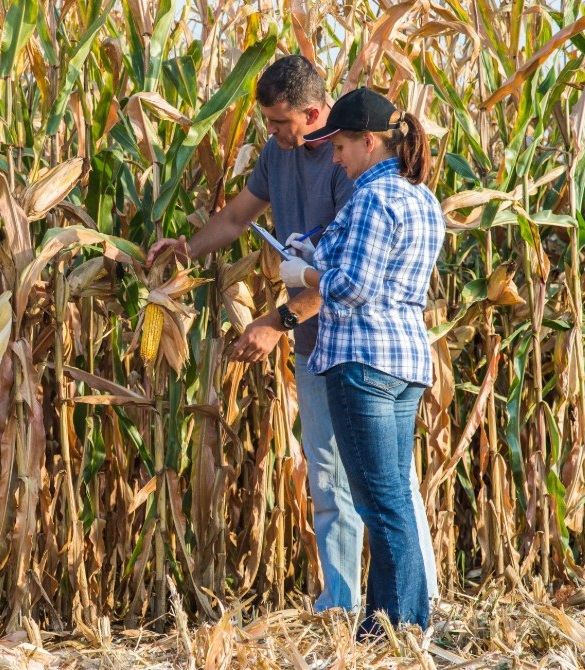
two agricultural experts analyzing corn 

Practical Tips for Farmers Incorporating Biologicals

For Canadian farmers considering the integration of Biologicals into their practices, here are some key takeaways for maximizing the benefits of these products: 

Learn how Biologicals can boost farm productivity

Our team of Biological Innovation Managers are dedicated to offering solutions based on your crop challenges. That’s why we’re dedicated to delivering highly effective solutions that complement current farming practices, while addressing the evolving needs of modern agriculture. 

man and woman standing in wheat field and staring at the sunset

Embracing a Biological future in Canadian agriculture

For Canadian farmers, the integration of Biologicals offers a forward-thinking solution to the challenges of modern agriculture. Biologicals provide additional tools for managing both biotic and abiotic stresses, enhancing nutrient efficiency, and supporting plant health in ways that complement conventional farming practices. With the ongoing support and innovation from industry leaders like Corteva, Biologicals are set up to play an increasingly vital role in agriculture, offering farmers a path toward improved productivity and profitability – keeping each farming operation strong today, tomorrow and for generations to come. 

As the Biologicals market continues to grow, farmers who adopt these products can stay ahead of regulatory changes, meet consumer expectations for sustainable practices, and ensure resilience of their operations in a changing climate. By embracing Biologicals, Canadian farmers are not only enhancing their current productivity but also investing in the future of farming. 

Sign up

Want to learn more about Biologicals? Sign up today to receive ongoing resources to help your farm thrive.

Learn more about Biologicals

Learn how these innovative solutions can boost crop health, enhance sustainability, and maximize your yields.