
Country Selector
Please enter a valid location
Whittle down weed seed
bank deposits

What if you could drastically reduce or eliminate waterhemp in four years? The main criteria? No more running the weed through the combine every year. One average waterhemp plant—four to five feet tall—can send 20,000 to 25,000 seeds flying out the back of the combine. A taller and healthier plant can release up to 500,000 seeds. With proper management, Midwest weed science researchers have proven to whittle down weed seed bank deposits. It all starts with a longer-term mindset beyond next year’s crop.
“Trying to go the extra mile to control all weeds with herbicides alone is a challenge, especially in a tougher economic year,” said Rodrigo Werle, weed scientist at the University of Wisconsin. “Yet sometimes small efforts can pay big dividends.”
Case in point is a farmer’s field that Werle drives by most days on his way to work for the past eight years. Historically, it’s been an almost weed-free field. Excessive rains last year drowned out and left a dry half-acre pocket where a few waterhemp plants went to seed.
“No action was taken on this field last fall, and this year the field is a disaster. Ten acres are now heavily infested with waterhemp. Since no effective action occurred, I can guarantee this entire 60- to 70-acre field will have severe problems next year,” he said.
A formidable opponent
If only the farmer had spent 30 minutes spot spraying, mowing, or tilling that half-acre before waterhemp seed production, it would have prevented the huge spread, he explained. This waterhemp pigweed species is dioecious, producing both male and female plants separately, which cross-pollinate to produce even faster herbicide-resistance. Werle’s stakeholders collected waterhemp seed from across Wisconsin in 2018 and again in 2023 to test for herbicide resistance.
Waterhemp has currently shown resistance to six different modes of action in the U.S., leaving only a few herbicide groups left as reliable options.
Small efforts, Enormous impact
Whatever herbicide-resistant driver weed — waterhemp, Palmer amaranth, kochia, giant ragweed, marestail, or others — you’re dealing with, Werle suggested these tactics to cut your weed seed bank deposits.
- Harvest weeds last. Combines are amazing weed seed spreaders, so harvest weedy fields or sections of fields last to reduce the spread to clean fields. “I understand it’s not always practical, but it’ll help your ROI in future years,” Werle said.
- Record weed severity. As you’re harvesting, take notes of weedy areas within fields and along field edges and ditches. Werle said this provides a roadmap for better planning and action next season.
- Change herbicide treatments by field sections. Rather than use one herbicide recipe across all corn and one across all soybean acres, Werle suggested varied rates and modes of action to attack severe weed infestations for greater success. “Better weed control can be as simple as using a higher preemergence rate and/or adding additional chemistry in weedy areas/fields,” he said.
- Change row spacing. One of the best weed management practices is darkness; keeping sunlight off the soil. “Our narrow-row research has shown tremendous benefit for mid- and late-season weed suppression,” Werle said. “Especially in soybeans, we’re struggling to control waterhemp postemergence. So, reducing row spacing from 30 inches to 20 inches or less provides excellent benefit.”
- Use cover crops. Werle said he talks extensively to growers about weed control and soil health benefits of using cereal rye as a cover crop. Extensive research has shown that biomass is critical, allowing cereal rye to reach a 30-inch height before terminating in soybean years, which will optimize weed suppression. “Letting cereal rye grow to reach 4,000 pounds (30-inch tall) of dry matter provides tremendous suppression of waterhemp, along with common ragweed, lambsquarters, foxtails and other weeds,” he said. “And the soil aggregate stability reduces erosion and improves soil health.”
- Planting green. If farmers terminate cover crops 10 to 15 days before planting, cereal rye growth typically won’t reach the biomass goal needed for weed suppression. Werle, other Midwest colleagues and experienced cover crop farmers are proving that planting green into growing cereal rye (terminating it at planting or after) offers tremendous benefits.
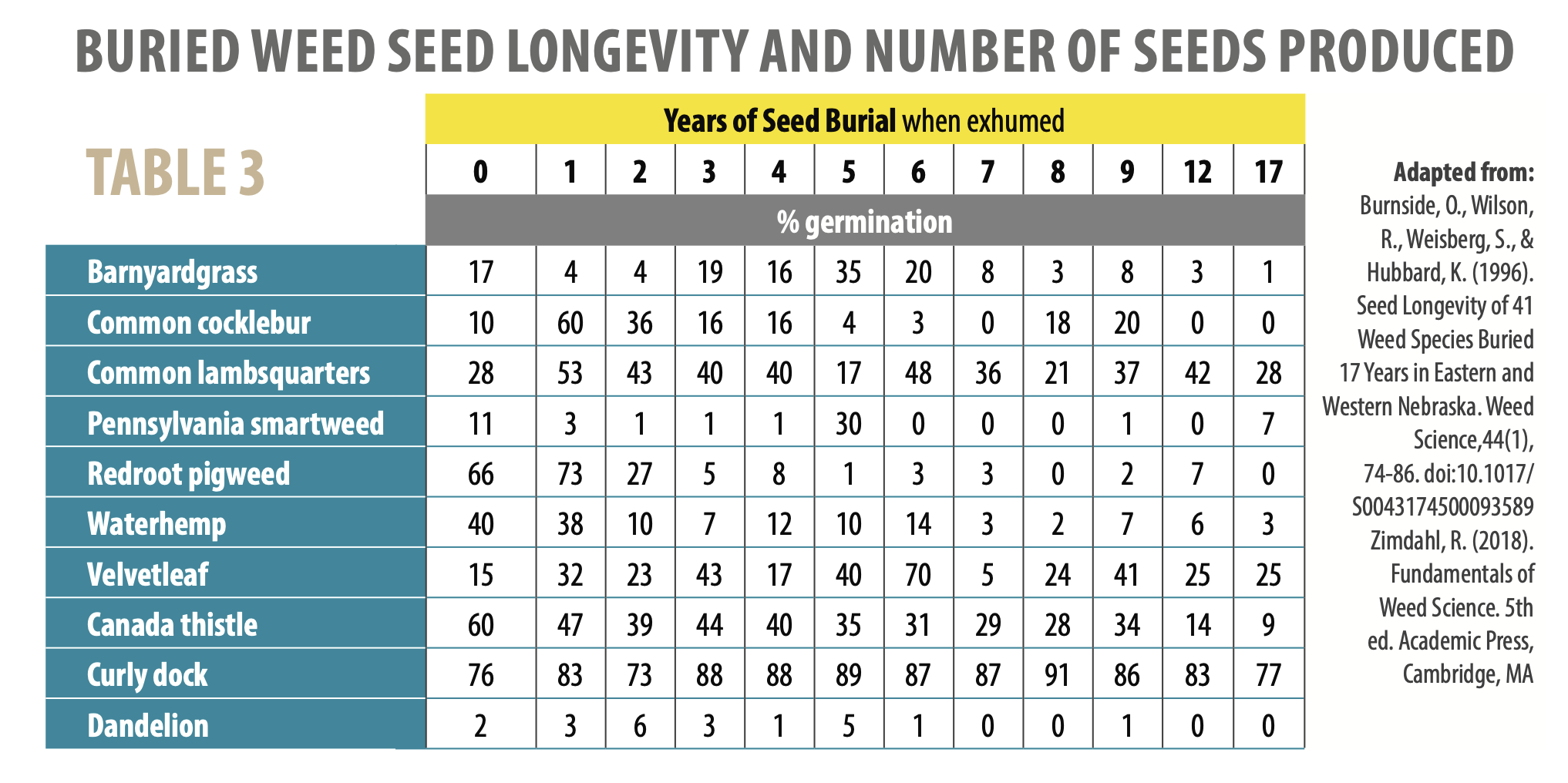
Werle said he believes these practices can help growers be more aggressive in whittling down their weed seed bank.
“It’s going to take four or five years of really good weed management where you’re not adding weed seed back into the soil; otherwise, you keep starting over,” he said.
For a deeper dive:
- Herbicide Resistance and Integrated Weed Management (GROW)
- Weed Seed Movement via Combines (case study)
- Weed Seed Management at Crop Harvest
- Between-field Combine Weed Seed Cleanout (recommended procedures)
Content provided by DTN/The Progressive Farmer.
The More You Grow
Find expert insights on agronomics, crop protection, farm operations and more.